
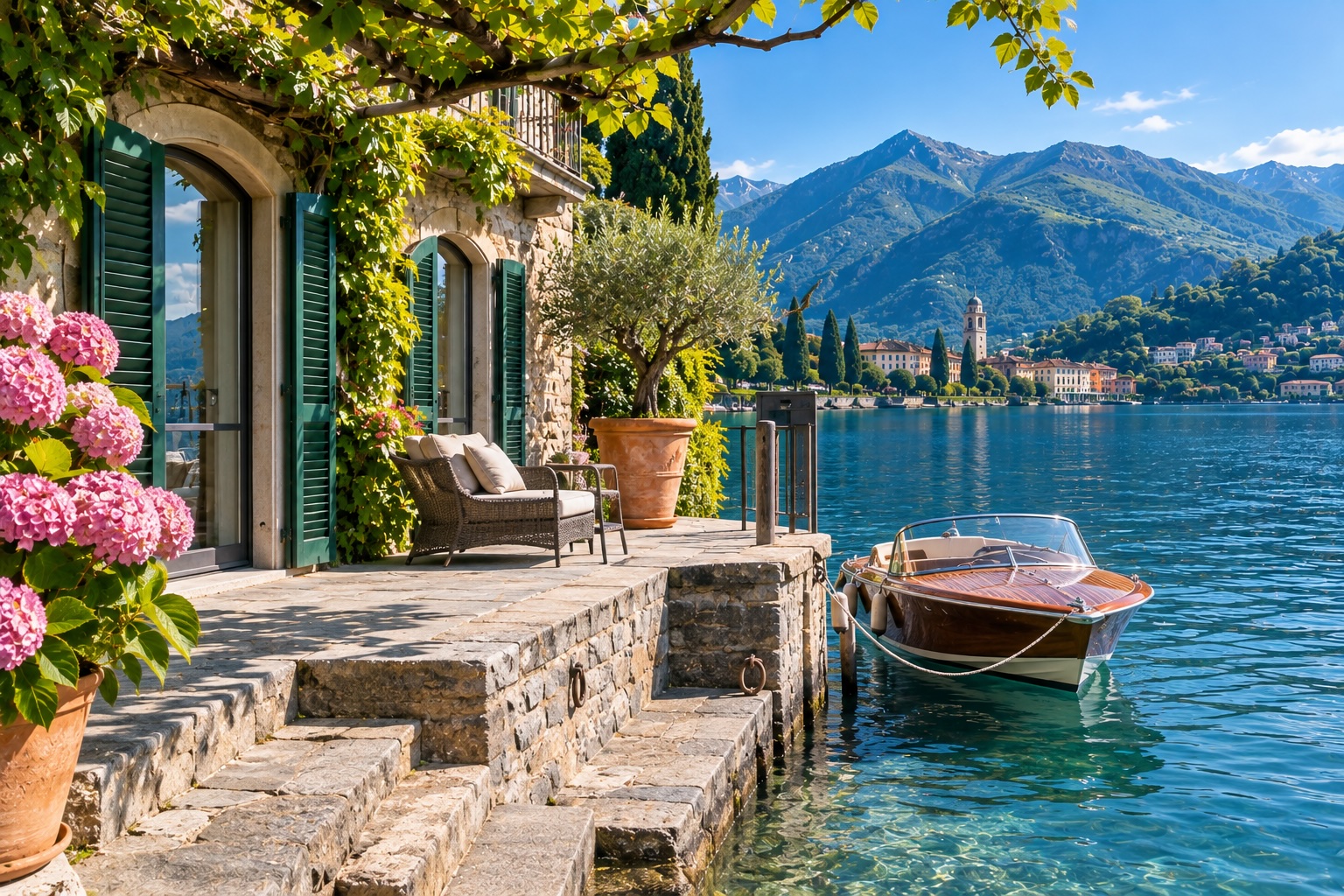
Lakefront Property on Lake Como: What to Check Before Buying
Owning a lakefront property on Lake Como is an aspiration shared by many international buyers. The possibility of enjoying uninterrupted views of the water, relaxing on a private terrace or accessing the lake directly from a garden represents a distinctive residential experience. From historic villas surrounded by landscaped gardens to contemporary apartments overlooking the waterfront, these properties occupy a particularly attractive segment of the local real estate market. However, purchasing a home directly on the lake requires careful consideration of several factors that may not be immediately apparent during a viewing. Legal access to the shoreline, building regulations, maintenance requirements, privacy and environmental conditions can significantly influence both the property’s value and its long-term enjoyment.
Understanding What Lakefront Property Really Means
The expression lakefront property is frequently used in real estate listings, but it does not always describe the same characteristics. Some homes are situated directly along the shoreline, with gardens or terraces extending towards the water. Others occupy elevated positions overlooking the lake, while certain apartments belong to residential complexes offering shared waterfront facilities. These distinctions are important because they affect privacy, accessibility and market value. A property advertised with direct lake access may provide a private entrance, a communal passage or access through neighbouring land. Before purchasing, buyers should establish precisely which waterfront features belong to the property and which are subject to shared ownership, public access or specific legal arrangements. A staircase leading to the water, a small beach or a boat landing does not automatically guarantee unrestricted private use.
Direct Lake Access and Shoreline Rights
One of the most important considerations concerns the legal status of access to the water. In Italy, lakeshores and certain structures associated with public waters may fall within the public domain, meaning that ownership of adjacent land does not necessarily extend to the lake itself. Piers, mooring facilities and waterfront platforms may require concessions or specific authorisations from the competent authorities. Buyers should therefore request documentation confirming the legal status of existing structures, including the validity and conditions of any concessions. Where access is provided through neighbouring property, it is equally important to verify whether a legally recognised right of passage exists. These checks are particularly relevant when private beaches, boat moorings or direct lake access represent a substantial component of the property’s advertised value.
Water Levels, Building Conditions and Maintenance
Lake Como is subject to seasonal changes in water levels, rainfall and weather conditions. Properties situated close to the shoreline may therefore experience environmental pressures that differ from those affecting homes located further inland. Buyers should investigate whether the building has experienced flooding, water infiltration or damage associated with exceptional lake levels. Basements, underground garages, retaining walls and terraces deserve particular attention, especially when positioned close to the water. External plaster, stone structures, balconies and metal elements may also require additional maintenance because of prolonged exposure to humidity and changing temperatures. A qualified technical inspection can help identify potential structural concerns, evaluate drainage systems and estimate future maintenance requirements. Consulting available flood-risk documentation and municipal planning information provides further insight into the property’s environmental characteristics.
Privacy, Accessibility and the Surrounding Environment
A waterfront location does not automatically guarantee privacy. Many Lake Como villages have public promenades, pedestrian paths, beaches or recreational areas running close to residential buildings. A property may offer spectacular views while remaining exposed to pedestrian activity, particularly during the tourist season. This consideration applies to internationally recognised destinations such as Menaggio, Bellagio and Varenna, but also to northern lake communities including Gravedona and Domaso. Buyers should evaluate the immediate surroundings, paying attention to nearby restaurants, public access points, seasonal traffic and recreational facilities. Accessibility is equally important, especially in historic villages where narrow streets and limited parking can complicate everyday use. Visiting a property at different times of day can provide a more realistic understanding of its residential characteristics.
Boat Moorings and Waterfront Facilities
For many international buyers, the opportunity to keep a boat close to their residence is one of the principal attractions of lakefront ownership. However, the presence of a pier or landing stage does not necessarily guarantee unrestricted use. Existing facilities may be subject to concessions, technical limitations or specific operating conditions. Buyers should verify whether authorisations remain valid, whether they can be transferred or renewed and whether the facilities are suitable for the intended type of boat. Water depth, exposure to prevailing winds and accessibility can influence the practicality of a private mooring. In some circumstances, a sheltered marina or professionally managed harbour may offer greater convenience than a private landing exposed to changing weather conditions.
Planning Restrictions and Renovation Opportunities
Many waterfront properties on Lake Como are situated within areas subject to landscape protection and planning regulations intended to preserve the architectural and environmental characteristics of the territory. These restrictions can influence renovation projects, extensions and modifications to existing structures. Buyers considering historic villas or traditional lakeside houses should establish which improvements are legally permitted before committing to the purchase. Alterations to façades, terraces, swimming pools and shoreline structures may require specific authorisations. Previous building modifications should also be checked for compliance with planning regulations and cadastral documentation. The presence of an existing structure does not automatically mean that it can be enlarged or modified, making professional technical verification an essential part of the purchasing process.
Lakefront Properties in Menaggio, Gravedona and Domaso
The western shore of Lake Como offers several distinct waterfront environments. Menaggio combines an internationally recognised location with an elegant promenade, established services and convenient ferry connections to Bellagio and Varenna. Its waterfront properties are particularly attractive to buyers seeking a prestigious second home with access to the central lake. Further north, Gravedona offers historic architecture, a picturesque waterfront and a more relaxed residential atmosphere, making it appealing for both holiday use and extended stays. Domaso presents a different environment, strongly associated with sailing, beaches and outdoor activities. Its waterfront residences can be particularly attractive to buyers interested in an active lifestyle, although seasonal activity and proximity to recreational facilities should be considered. Nearby municipalities such as Dongo, Musso and Pianello del Lario provide additional opportunities, including quieter residential settings and properties with different relationships to the shoreline.
Property Value and Long-Term Investment Considerations
Direct waterfront positioning is generally considered a premium characteristic in the Lake Como property market, particularly when combined with panoramic views, architectural quality and private outdoor spaces. However, proximity to the water alone does not determine value. A historic villa with landscaped gardens and authorised private access occupies a different market segment from an apartment overlooking a public promenade. Buyers should consider building conditions, accessibility, energy efficiency and potential maintenance costs alongside the asking price. For properties intended for holiday rentals, waterfront views can contribute to commercial appeal, but potential income must be evaluated against seasonal demand, management expenses and applicable regulations. The most attractive investment is not necessarily the property with the most spectacular view, but the one offering a sustainable balance between acquisition cost, usability and long-term value.
Buying a Lakefront Property with Confidence
Purchasing a lakefront home on Lake Como requires careful legal and technical due diligence. International buyers should work with qualified professionals capable of verifying ownership documentation, planning compliance, cadastral information and any relevant shoreline concessions. A detailed inspection can identify maintenance requirements, while legal verification can clarify ownership rights, easements and obligations associated with the property. From the prestigious central lake destinations to the waterfront communities of Menaggio, Gravedona, Domaso and the surrounding northern municipalities, buyers can explore a wide range of residential opportunities. Understanding the legal, environmental and practical characteristics of each property is essential to making an informed decision. With appropriate professional guidance, owning a home directly on Lake Como can represent both a rewarding lifestyle choice and a carefully considered long-term investment.