
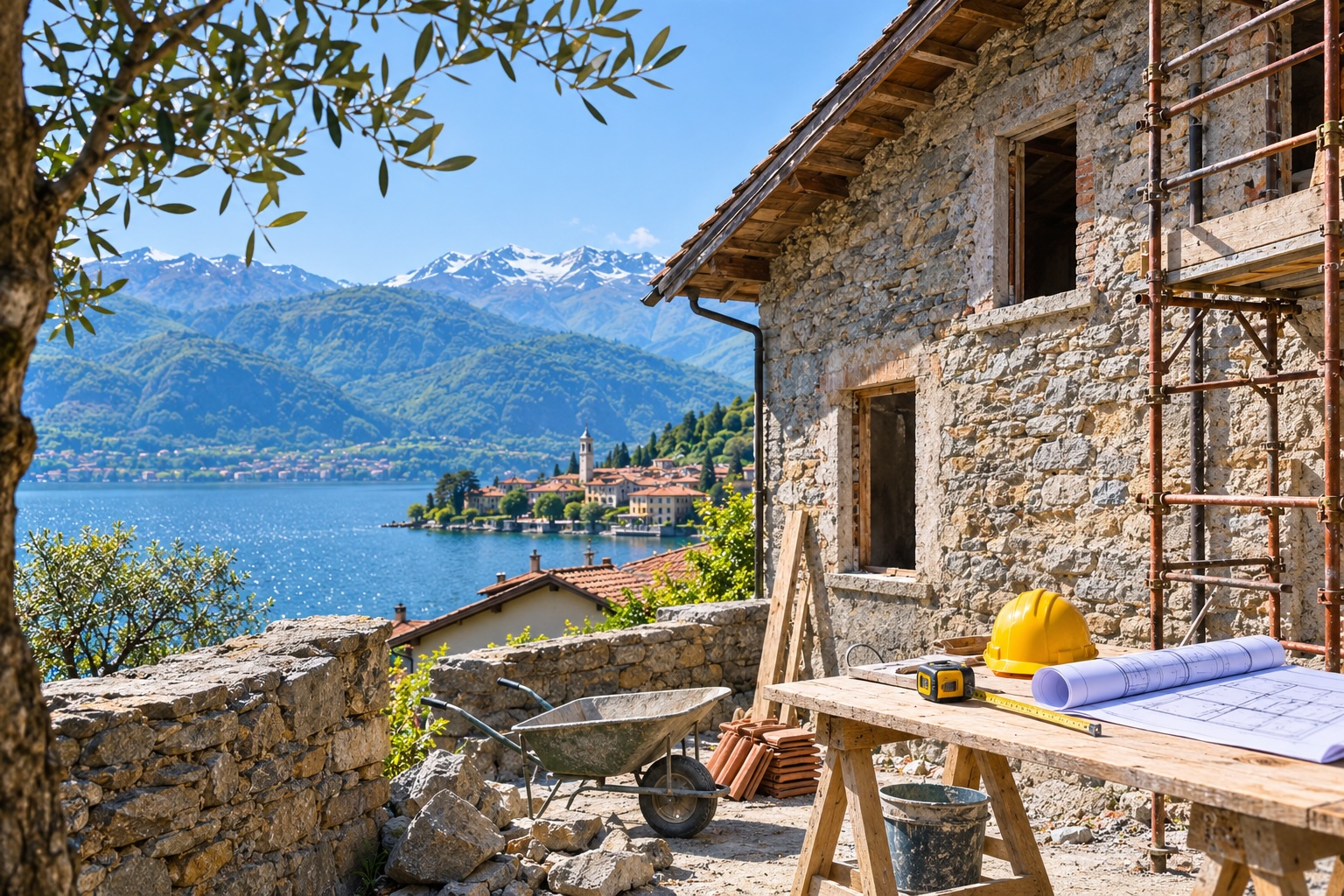
Renovation Property on Lake Como: Is It Worth Buying?
Buying a property to renovate on Lake Como can be an attractive alternative to purchasing a modern apartment or a fully restored villa. Traditional stone houses, historic village properties and older lakeside apartments often offer architectural character, distinctive locations and opportunities for personalisation that are difficult to find in newer developments. However, the financial advantages of buying a renovation property are not always as straightforward as they initially appear. For international buyers, understanding construction costs, planning restrictions, property conditions and the characteristics of the local market is essential before deciding whether a renovation project represents a worthwhile investment.
The northern part of Lake Como, particularly around Menaggio, Domaso, Gravedona, Dongo and the surrounding hillside villages, offers properties requiring different levels of restoration. Some need relatively straightforward improvements, such as new bathrooms, kitchens and heating systems, while others require extensive structural work, roof replacement or complete renovation. The difference between these situations can significantly influence the total investment and the time required before a property becomes suitable for occupation. The real opportunity lies in identifying buildings where the purchase price and renovation costs remain proportionate to the property’s location, characteristics and potential market value.
Why Renovation Properties Attract International Buyers
One of the main attractions of purchasing a property requiring renovation is the possibility of entering the Lake Como real estate market at a lower initial purchase price. Older houses and apartments are sometimes offered at prices below those of comparable renovated properties, particularly when they are located away from the most sought-after waterfront areas. Traditional architecture is another important consideration. Historic properties often feature natural stone walls, exposed wooden beams, vaulted ceilings and architectural details that reflect the history of the surrounding villages. These elements can contribute significantly to the character of a home, particularly when restoration work preserves the original structure while introducing modern standards of comfort. For buyers seeking a second home or planning a permanent relocation, renovation also provides greater freedom to adapt interior spaces to personal requirements. Room layouts, energy systems, materials and finishes can be selected according to individual preferences, subject to the technical and regulatory limitations of the building. Nevertheless, the potential benefits should always be evaluated against the actual condition of the property and the costs required to complete the project.
Understanding the Real Cost of Renovation
The purchase price represents only one component of the total investment. Renovation costs depend on several factors, including the age of the building, accessibility, structural condition, existing installations and the quality of the materials selected. Electrical systems, plumbing, heating installations, windows and insulation frequently require attention in older Italian properties. Roof repairs, moisture problems and structural reinforcement can introduce additional expenses that may not be immediately apparent during an initial viewing. In historic village centres, narrow streets and limited vehicle access can also increase construction costs because transporting materials and equipment becomes more complicated. Before purchasing, international buyers should obtain a detailed technical assessment from a qualified local professional, such as a geometra, architect or engineer. A preliminary renovation estimate should identify the main interventions required and distinguish essential structural work from optional improvements. It is also advisable to include a contingency allowance for unexpected expenses, particularly when dealing with older buildings. The most useful financial comparison is therefore not between the asking price of a renovation property and that of a finished home, but between the complete cost of acquisition and restoration and the market value of a comparable property in the same location.
Planning Permission and Historic Building Restrictions
Renovating a property on Lake Como involves compliance with Italian building regulations and, in certain circumstances, additional restrictions related to landscape protection or historic preservation. Many villages around the lake contain buildings within historic centres or areas subject to landscape protection. Exterior modifications, changes to windows, roof alterations and extensions may therefore require specific authorisations. Depending on the proposed interventions, works may require different administrative procedures, including CILA, SCIA or a building permit. The applicable process must be established by a qualified technician after reviewing the property and the intended project. Before committing to a purchase, buyers should also verify the building’s urban planning and cadastral documentation. Differences between the authorised configuration and the existing property can create complications, particularly when previous alterations were carried out without the necessary approvals. Identifying these issues before signing a binding purchase agreement helps reduce the risk of unexpected costs and delays. In historic buildings, preserving original architectural elements can also influence the selection of materials and construction techniques, making professional guidance particularly important.
Location Matters More Than the Renovation Budget
A beautifully renovated property does not automatically become a successful investment if its location does not meet the expectations of future occupants or buyers. On Lake Como, accessibility, views, sunlight, parking and proximity to services can have a considerable influence on residential appeal and resale potential. Properties situated within historic village centres may offer authentic architecture and attractive surroundings but sometimes present practical limitations. Narrow staircases, limited parking and restricted access can become significant considerations for families, older residents or buyers intending to use the property throughout the year. Similarly, hillside houses may provide exceptional panoramic views while requiring regular travel by car to reach shops, restaurants and other services. In northern Lake Como, Domaso and Gravedona offer residential environments with access to the waterfront and local facilities, while the hills above the lake contain traditional settlements where restoration projects can be particularly interesting. Menaggio and neighbouring communities provide further alternatives, with differences in accessibility, demand and property characteristics. The right location ultimately depends on the intended use of the property. A secluded stone house may be ideal for occasional holidays but less practical for permanent residence, while an apartment requiring modernisation within walking distance of essential services may offer greater flexibility for year-round living.
Energy Efficiency and Modern Comfort
Improving energy performance is one of the most important aspects of renovating older properties on Lake Como. Traditional buildings were constructed using materials and techniques that often differ considerably from modern energy standards. While thick stone walls can provide thermal mass, they do not necessarily guarantee adequate insulation or efficient heating. Replacing outdated heating systems, improving windows and addressing thermal bridges can make a substantial difference to comfort and running costs. However, the most appropriate solutions depend on the building’s construction, exposure and architectural characteristics. In historic properties, certain insulation techniques may be unsuitable or restricted, particularly when they alter protected façades. Moisture management also deserves attention because older stone buildings require renovation methods compatible with their original materials. Inappropriate interventions can create problems rather than resolve them. Buyers intending to use their property throughout the year should pay particular attention to winter conditions, as the orientation of a building, surrounding mountains and availability of direct sunlight can significantly influence indoor comfort during colder months.
Renovating for Personal Use or Investment
The financial evaluation of a renovation property changes depending on whether the buyer intends to live in the home, use it as a holiday residence or generate rental income. For personal use, architectural character, emotional appeal and the possibility of creating a customised living environment may justify an investment that would not necessarily produce the highest financial return. For buyers considering resale or rental opportunities, the calculation becomes more commercially oriented. The total acquisition and renovation costs should be compared with realistic market values and potential rental performance, taking account of management expenses, maintenance, taxation and periods without occupancy. Tourist demand around Lake Como can make renovated properties attractive for short-term accommodation, but rental income should never be assumed without analysing the specific location and property characteristics. Local regulations, administrative requirements and condominium rules may also influence the feasibility of tourist rentals. Renovation projects intended primarily for investment require particular discipline when selecting materials and finishes. High-quality improvements can strengthen market appeal, but excessive expenditure on features that future buyers may not value can reduce the financial attractiveness of the operation.
The Importance of Local Professional Support
International buyers often underestimate the complexity of coordinating renovation work in another country. Language differences, administrative procedures, contractor availability and the need for regular site inspections can make even relatively straightforward projects challenging to manage remotely. Working with experienced local professionals helps establish a clearer understanding of the property’s technical condition and the practical requirements of the renovation. An architect, engineer or geometra can assess the feasibility of proposed changes, coordinate the necessary documentation and support the management of construction activities. It is equally important to obtain written estimates, define the scope of work and establish realistic schedules before construction begins. Renovation timelines can be affected by administrative approvals, the availability of specialised contractors and unexpected conditions discovered during the works. For buyers living abroad, appointing a reliable local professional to oversee the project can provide continuity and reduce the difficulties associated with managing multiple contractors from a distance.
Is Buying a Renovation Property on Lake Como Worth It?
A renovation property on Lake Como can represent an attractive opportunity when the purchase price, location, technical condition and restoration budget are carefully balanced. The potential to preserve traditional architecture, improve energy performance and create a personalised home makes these properties particularly appealing to buyers who appreciate the character of historic Italian buildings. However, renovation should not automatically be considered a less expensive alternative to purchasing a finished property. Unexpected structural problems, planning restrictions and construction costs can substantially change the original financial assumptions. The most successful projects generally begin with realistic expectations, thorough technical investigations and a clear understanding of the property’s intended use. At Altolario Real Estate, evaluating renovation opportunities means looking beyond the initial asking price and considering the long-term potential of each property within the northern Lake Como market. Whether the objective is a permanent residence, a holiday home or an investment, the right purchase should combine architectural appeal with practical feasibility and financial sustainability. Ultimately, the value of buying a renovation property lies not simply in acquiring a home at a lower price, but in recognising the potential of an existing building and transforming it into a property that meets contemporary expectations without losing the character that makes Lake Como so distinctive.